East Branch Telemetry Study By Logan Clark and Dr. Mark Luttenton
Most of Michigan’s rivers have been impounded at one time or another, and many of those dams are still in place today. Most dams no longer serve their historic purpose, but they do impede the upstream movement of fish, denying them access to potential habitat and spawning sites. In recent years, there has been a concerted effort to remove old dams and open upstream sections of rivers previously inaccessible to downstream fish populations. That is exactly the case on the East Branch Au Sable River. After years of planning, the low-head dam that was designed to push water into the old Grayling fish hatchery was removed, opening approximately 20 miles of river to fish.
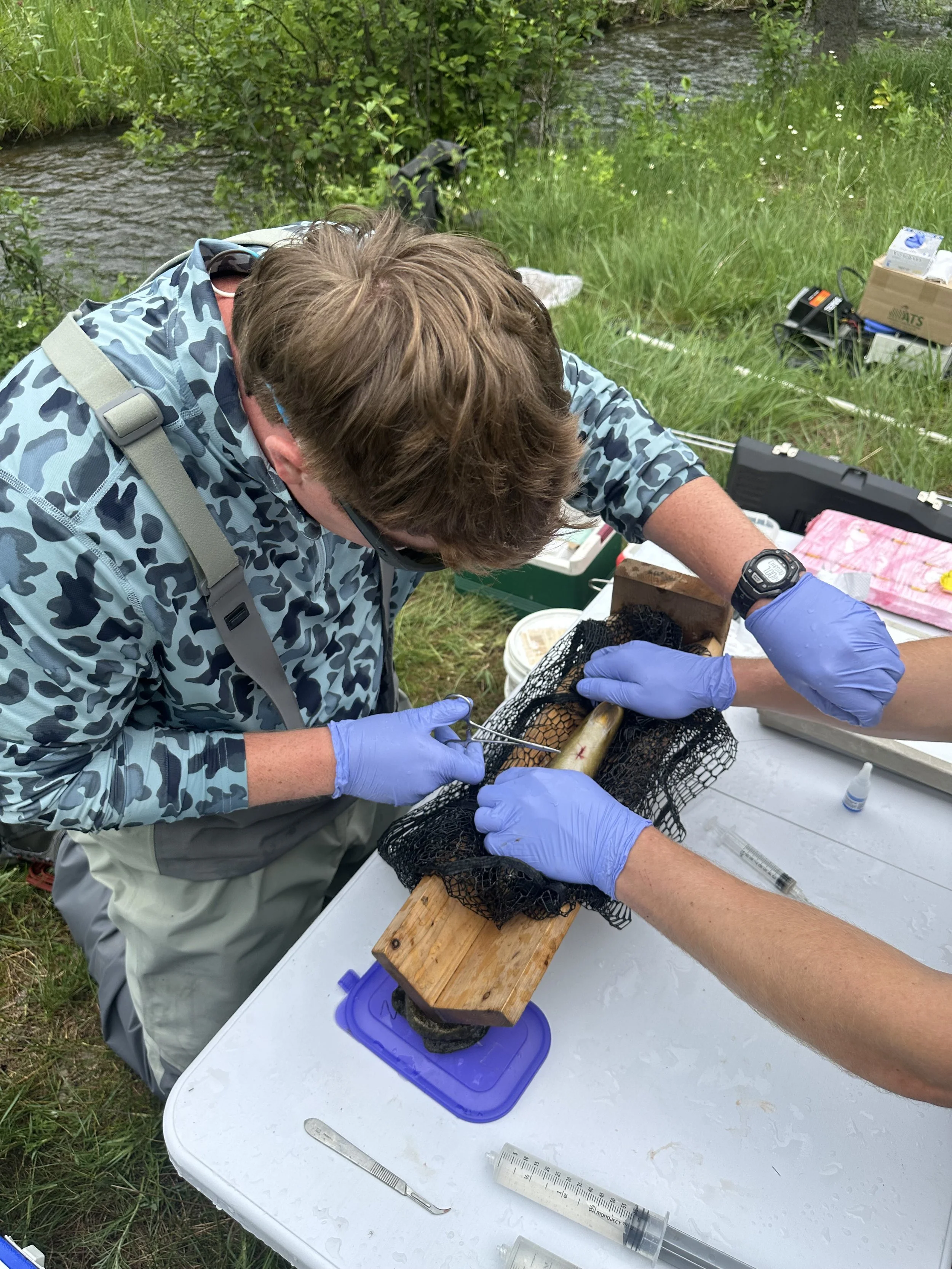
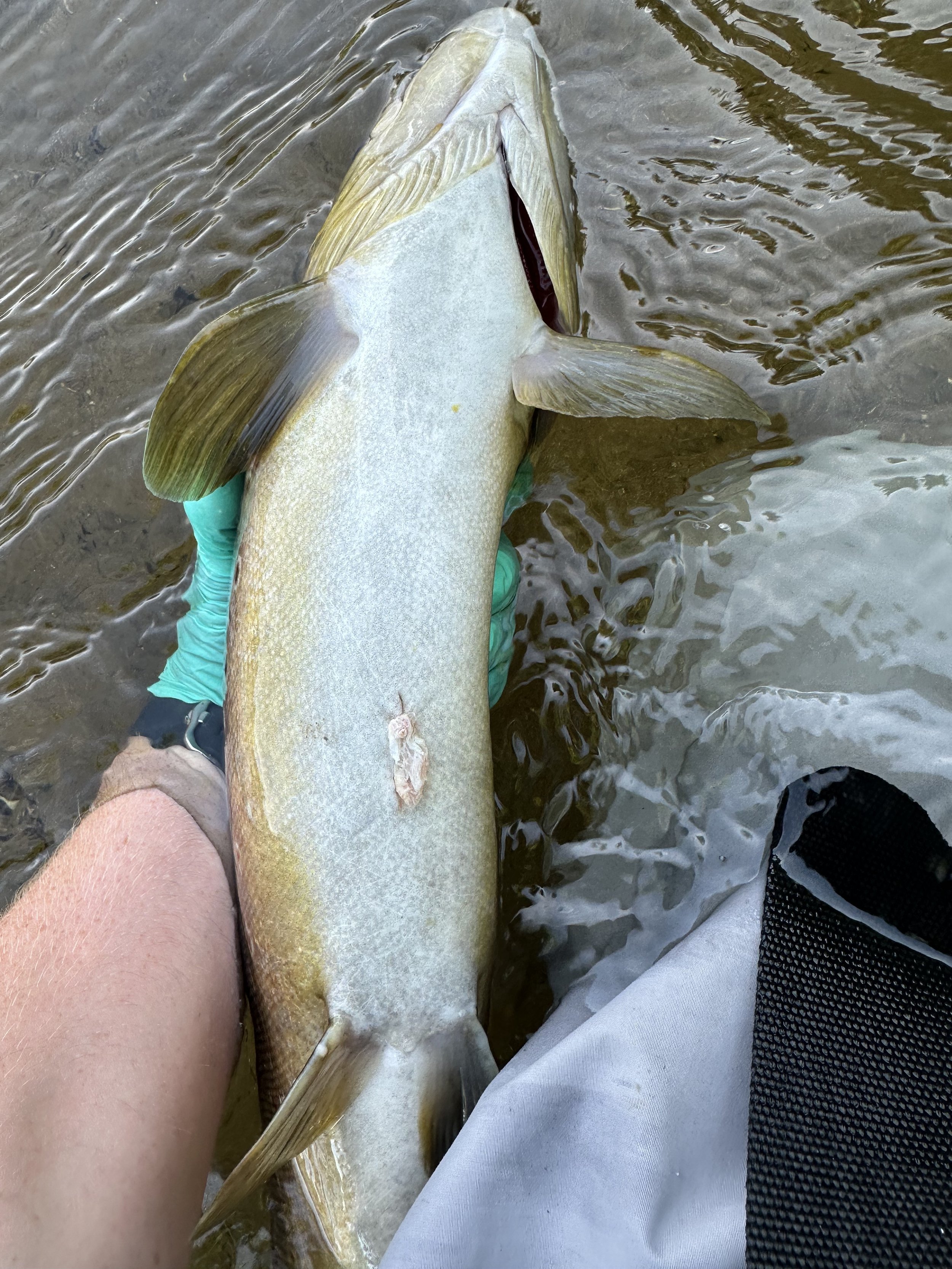
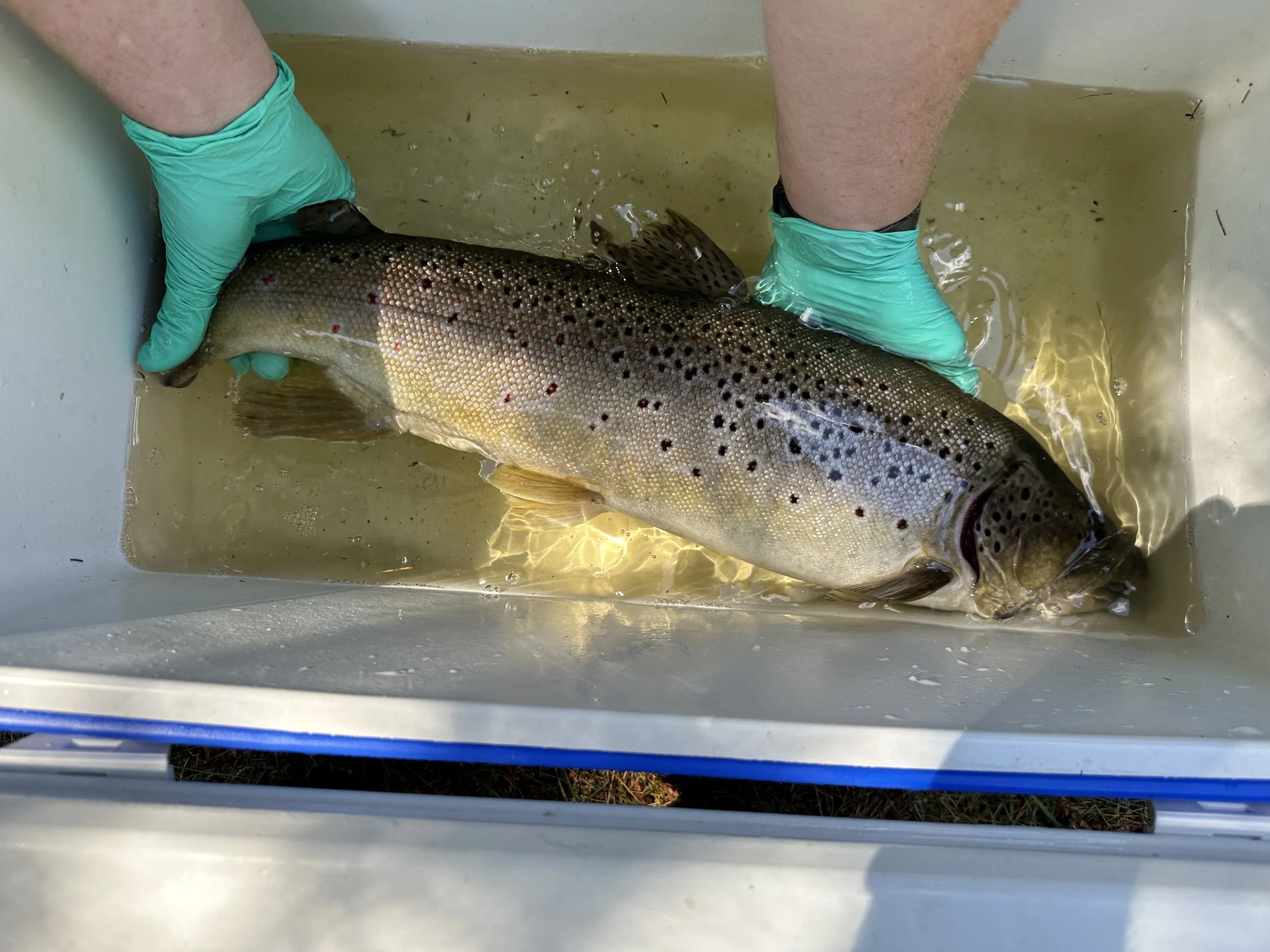
Of course, one question emerged as the time for dam removal approached, “would trout actually move upstream after the dam was removed?” To evaluate this question, MGFTU supported a radio telemetry study of 20 Brown Trout (14-25”) to better understand their response to the change in habitat. Twelve trout were tagged immediately below the hatchery, four at the hospital access, and four above the East Branch confluence with the Main Branch Au Sable River. Fish were tagged after the dam was removed to avoid tagging fish that may have exited the East Branch in response to the actual dam removal and channel reconfiguration. Tagging began on June 25th, 2024, and continued through July 23rd, 2024. Most of the tagged fish were successfully tracked from their initial tagging date in 2024 until late August of 2025.
The East Branch trout exhibited some behaviors similar to those observed for trout across the upper Au Sable River system, in particular, fish establish homesites. Generally, Brown Trout establish a homesite in Large Woody Structure (LWS) and deeper pools and spend a majority of their time at their homesite.
Of the fish tagged, six or seven remained in the East Branch between the hatchery and the confluence with the main branch. They generally established homesites in the deep runs and LWS in the East Branch. These fish did not travel far from their homesites either during spawning or during different seasons. The farthest one of the resident fish travelled from its homesite was approximately 15 yards above the site of the old dam during spawning but returned to its homesite downstream of the hatchery shortly afterward.
However, the Brown Trout tagged in the East Branch exhibited movement patterns that differ somewhat from those typically observed for trout previously studied using telemetry. One large fish (23”) moved upstream of the Grayling Hatchery dam site. It established a homesite down river of the I-75 bridge. During late summer it moved down river approximately a quarter mile to a new homesite but was still above the Grayling Hatchery. During late October, the fish was located back upstream, next to a spawning redd, approximately 50 yards below a well-established beaver dam. This was the furthest upstream any fish were found on the East Branch.
In addition, several trout moved considerably farther. For example, four fish, including the two largest fish (both 25”) migrated from the East Branch downstream into the main branch shortly after they were tagged. Two of these fish travelled almost 10 miles. This behavior generally differs from what has been previously observed for Brown Trout in the Au Sable River system. For example, Brown Trout over 14” on the North Branch Au Sable generally return to their original homesites (where they were initially captured) after being tagged.
Winter conditions resulted in a change in Brown Trout homesite preference. During December and January, trout tended to move downriver from the East Branch, and upriver in the main branch, to areas with slower moving current. Fish tagged in the East Branch ventured to the Grayling stump pond, above the Grayling stump pond, and 12+ miles downstream into the Main Branch Au Sable. Once trout had established these new winter homesites, they remained fairly sedentary. This corresponds to previous winter telemetry conducted in 2013 that indicated trout decrease movement during colder winter temperatures.
The first tracking event after January occurred on May 3rd, 2025. Surprisingly, a majority of the Brown Trout had returned to the Grayling Hatchery by that date; even before any fish had been stocked in the hatchery. Some tagged fish were found in the raceways, and others were in deeper pools. Once the tagged fish lost access to the raceways, they established new preferred homesites, with some homesites providing easy access to fish pellets washing out of the hatchery. Two fish never returned to the hatchery and established homesites in the Main Branch Au Sable.
A total of 12 fish, including the two largest fish and the fish that traveled upstream of the hatchery the previous summer, spent part of summer 2025 below the hatchery, likely eating pellets. By early July, some of the Brown Trout began leaving the East Branch. The two largest fish left the hatchery at the same time in late July and returned to the same homesites they had occupied in the Main Branch the previous summer. Similarly, the trout that had moved upstream in the East Branch during 2024, remained at the hatchery until late July, then returned to the homesite it occupied the previous summer upstream in the East Branch.
Although only one fish moved above the old hatchery dam location, this study did demonstrate the larger Brown Trout will move upstream in the East Branch now that the dam has been removed. The fish that remained below the hatchery likely did so due to the desire of Brown Trout to remain at an existing homesite. However, it is unclear why several of the larger trout left the East Branch. Based on the behavior of the two largest fish it is possible that this group of fish migrate in and out of the East Branch annually, and they were simply tagged just before they would start their migration out of the East Branch.
It may take some time until the success of the dam removal is fully realized. Large, older trout may not adapt new behavior quickly, and upstream movement of trout may be more common for younger fish that have not established preferred homesites. A concurrent study using different methods has tagged several hundred young-of-the-year trout which will, in the next few years, hopefully fill in more of the story.